Feline idiopathic cystitis or commonly known as sterile cystitis. This condition is inflammation of the bladder. The veterinarian checks the cat’s urine to determine if the urine is sterile or if it has tiny crystals or sand like particles in the urine.
 |
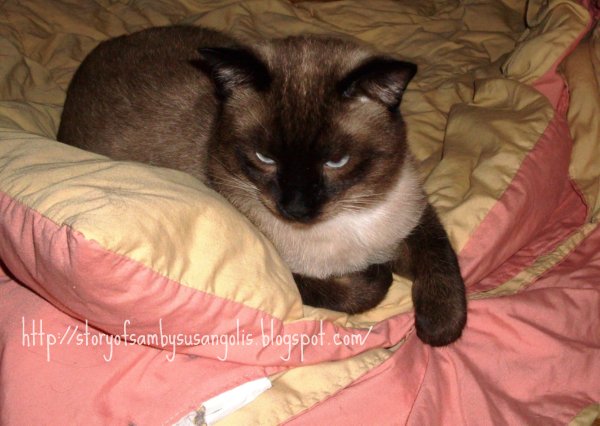
| Niki after 1 week of treatment |
My cat is Niki is a 12 year old socialized feral Maine Coon Cat was recently diagnosed with FIC. She is independent,territorial and aggressive with our other cats. She is not a "people" cat. She likes her veterinarian and my husband and I. Her bad behavior and aggressive nature has caused her to have stress.
Stress, dry cat food, obesity, lack of exercise put your cat at risk for Feline idiopathic cystitis condition.
Watch for Symptoms
Cats that are sick will urinate in places that would get your attention; sofa, chair, bed, kitchen counter. This is their way of telling you that something is not right. If you cat is urinating outside of their litter box and it is not due to new cat or dirty litter box then contact your veterinarian.
Other symptoms are excessive urination with signs of strain or pain and blood in urine.
As a pet owner you know your cat and thus know when something is not right. My cat showed signs of wanting to sleep more and she also had tear stained eyes. She appeared to be putting on weight but her appetite seemed to lessen.
Over the course of three weeks she became more aggressive with cats and with me. She did not want to show weakness so she hid in the back of the closet and did not sleep at the foot of our bed. She did not want to be held and she did not want to be groomed or petted. I noted all of her symptoms in a journal. I treated the home with feliway mood modifier and it seemed to help some. Her illness came on quickly and when she showed no interest in food and urinated on my kitchen counter I made an appointment for her to see her veterinarian.
If you note behavior changes in your cat, a loss of appetite, and urinating outside of litter box when box in clean then note the signs and contact your veterinarian.
Diagnosis Treatment Prevention
The veterinarian will give your cat a wellness exam and will do a urinalysis. Urine appearance that is red or brown in color, has a cloudy look and has a strong ammonia odor could indicate a serious cat health condition.
In Niki’s case, her veterinarian examined her urine under a microscope to look for white blood cells which indicated inflammation, and crystals; bladder stones. Her urine showed signs of blood and tiny crystals. Further tests are needed; mature cat blood screen and ultrasound. These tests are needed to rule out serious kidney, liver and bladder disease.
Meloxicam Metacam®. Treatment
Meloxicam a non-steroidal anti-inflammatory agent was prescribed. The treatment of Meloxicam was short term to control the severity of Niki's pain and to reduce the bladder inflammation. Along with medication Niki is to eat Hill’s c/d food for bladder health for the rest of her life.
In many cases the Feline idiopathic cystitis will resolve within a week provided your cat has a wellness exam by their veterinarian and follows the doctor’s orders.
What you can do to Prevent Feline Idiopathic Cystitis
Prevent FIC by feeding your cat a high protein and low carbohydrate canned food or make your cat a raw food. Raw food with no fillers, chemicals or preservatives is very healthy for cats.
Make sure your cat is hydrated. Do this by mixing the canned cat food with two tablespoons of filtered water or low sodium chicken broth.
Preventative high protein with low carbohydrates cat food that I recommend:
Keep your cats water fresh. If your cat is finicky about drinking water than enhance the flavor with low sodium chicken broth or add a tablespoon of tuna water from canned tuna.
Another way to prevent FIC is to keep your cat active. Plan a play time for your cat. Choose a feather type toy like da bird so that your cat can chase the bird. Niki plays with da bird daily and she likes her catnip mouse and balls. If your cat is lazy and does not want to play then use a clicker to train them with low fat treats. You can get your cat to do anything provided there is a food reward.
Install an outdoor cat cottage or garden for your cat. Allow your cat to spend time outdoors in a safe area. The fresh air and the natural vitamin D will improve your cat’s health. If not a cat outdoor enclosure, then consider walking your cat on a leash in your yard.
Make sure you have a litter box for each cat in your household. Keep the litter box clean. A cat will feel stress if they have no access to a clean litter box.
Control your cats stress by eliminating stressful situations.
I set up a safe room for her on the heated/air conditioned sun porch. The floor is cement and there are 8 windows that provide fresh air and a view of bird feeders. The room has all that she needs; bed, toys, litter box, cat tree and window seats. Niki loves her safe room and both my husband and I have seen an improvement in her disposition. She is using her litter box, eating well and aggressiveness is gone. She likes being the center of attention.
 |
| Niki stress free in safe room: she loves her cat tree |
Meloxicam
Niki had a reaction to the meloxicam, after her first dosage she began vomiting, however there was no diarrhea. Meloxicam is the only approved NSAD for cats in the USA. It is not recommended for long term usage as it causes severe kidney damage; renal failure. According to manufacturer of Meloxicam – this warning has been issued "Repeated use of meloxicam in cats has been associated with acute renal failure and death.
Other Side effects of meloxicam include stomach and intestinal ulcers, intestinal bleeding, dark or tarry stools, diarrhea, vomiting, and loss of appetite. The side effects caused from meloxicma can be life-threatening and the side effects can occur quickly.
Cat Food Treatment for FIC
FelV and FIV
If you have a cat has feline immunodeficiency virus (FIV) or leukemia (FeLV) then it is best for you to feed your cat a high protein, low carbohydrate diet and to make sure that they are hydrated. Plan to keep your cat active by playing with them for one hour each day. Keep your cat in a happy state of mind. Stress is a factor for this cat disease.
Notes from Susan:
It was hard for me to see that Niki was sick because she is a cat with a bad behavior. She showed no signs of strain in litter box, no blood in urine or odor. Her appetite was always good until one day she did not eat and she urinated on my kitchen counter. She was telling me loud and clear that something was wrong.
On December 23, 2011 I contacted my veterinarian. Her appointment was on December 26, 2011. I would hope that we caught her FIC in time and that with long term treatment to control stress and feed her a prescription diet that she will live a long life.
Her mature cat blood test is scheduled for January 13th with follow-up appointment on the 23rd.
January 10th Update
Niki has been using her litter box for the last two weeks and I think because we have controlled her stress that she is healthier. Since her diagnosis for FIC she has been viewed grooming Gracie our other mature cat and playing with a tennis ball. Niki is happier. She will sit on my lap and she will purr very loudly. I hope that these positive outward signs are an indication that her health has improved and that there will be no serious blood results.
Niki's sedation for blood tests and ultrasound is on 1/13/2012. I am praying that she is Okay.
January 17th:
Niki's blood tests showed that there is no reason to worry. Her blood was normal. The veterinarian wants her to stay on the prescription Hills cd multicare bladder health diet for the rest of her life and we are to recheck her urine in six weeks. As of this date the diet and the low stress has agreed with Niki and she is using her litter box. One thing that I did notice about her litter box behavior is that it has to be clean at all times or she gets grouchy.