Showing posts with label Sam. Siamese cat. Show all posts

Saturday, May 9, 2026

Why Cat Toys Matter for FIV Cats: Exercise, Enrichment & Happiness


Cat toys support exercise, enrichment, and stress relief for FIV cats. See how Sam and Buddy stay active, happy, and healthy through daily play.

Recently, I sent a friend a cat toy gift pack for her new kitten. She thanked me, said they were adorable, and added that she never bought toys for her cats because she thought they were just a marketing gimmick. Of course, I didn’t agree my cats thoroughly love their toys. Sam and Buddy not only play with them, they bring them to bed like comfort objects

Sam and Buddy lying in cat bed with their toys, catnip mouse and cat ball


🐱 FIV Cats Need Playtime for Health and Happiness

Both Sam and Buddy have FIV, and their toys encourage daily exercise. Physical activity helps prevent obesity and keeps their muscles strong. The mental stimulation from chasing, batting, and stalking toys also reduces anxiety and stress something every indoor cat benefits from.

Some people say cat toys help with dental health, though I’m not entirely sure about that. What I do know is that playtime keeps my cats happy, alert, and emotionally balanced.

FIV cat care tip: Regular, gentle play sessions are one of the easiest ways to support your FIV cat’s overall health.

🐱 Sam’s Daily Toy Routine

Siamese cat Sam chasing his ball toy across the floor


Sam treats his toys like prey. He’ll stalk them across the floor before pouncing, tail twitching with excitement. His favorite is a catnip mouse  he carries it around the house in his mouth, making muffled meow sounds as if announcing his victory. It’s his daily ritual, and it’s pure joy to watch.

🐱 Key Health Benefits of Cat Toys

Physical Activity & Weight Management: Toys like feather wands, laser pointers, and chasing balls encourage movement, improving muscle tone and helping maintain a healthy weight.

Mental Stimulation & Enrichment: Interactive toys such as puzzle feeders challenge a cat’s mind and prevent boredom.

Reduced Stress & Anxiety: Play relieves tension, especially for indoor cats who might feel confined.

Dental Health: Chew toys like silvervine sticks or textured catnip toys can help clean teeth and massage gums.

Bonding & Behavior Support: Shared play strengthens your bond and reduces unwanted behaviors like scratching furniture.

🐱 Tips for Keeping Playtime Fresh

Rotate toys regularly to keep your cat interested. Refill or spray catnip toys to renew their scent, and always supervise play with string or small items that could be swallowed.

Play rotation idea: Keep a small basket of toys and swap a few in and out every few days so your FIV cat always feels like something “new” has appeared.

🐱 The Bottom Line: Cat Toys Equal Happiness

For Sam and Buddy, toys aren’t optional  they’re part of their daily wellness routine. In our home, cat toys mean movement, mental engagement, and most of all, happiness for my FIV cats.

Thursday, May 7, 2026

How to Protect FIV Cats From Fleas & Ticks Indoors


Learn how we protect our indoor FIV cats from fleas and ticks using gentle, chemical‑free prevention that stops pests before they ever enter the home.

Why indoor FIV cats still need flea and tick protection

When you share your home with an FIV cat, protecting them from fleas and ticks isn’t just a seasonal chore it becomes a year-round responsibility. A lot of people assume that if a cat lives strictly indoors, they’re automatically safe. Unfortunately, that just isn’t true. The biggest risk to an indoor FIV cat doesn’t come from the outdoors itself. It comes from us bringing fleas, ticks, and even worm eggs inside on our clothing, shoes, and everyday items without realizing it.

Sam siamese and buddy ginger cats, sitting next to each other with cloud above that says "whats a flea"


Fleas can cling to pant legs after a quick walk through the yard. Ticks can hide in the seams and grooves of shoes after stepping through tall grass or leaf litter. Even microscopic parasite eggs can ride in on tiny particles of soil stuck to soles or cuffs. For a healthy cat, this is annoying. For an FIV cat, whose immune system is already working harder, these small exposures can be much more stressful and potentially dangerous.

That’s why, years ago, Mike and I completely changed how we think about parasite prevention. Instead of reaching for harsh topical chemicals and hoping our cats could tolerate them, we decided to focus on something gentler: controlling what we bring into the house. Once we started treating the humans and the home instead of the cat everything shifted. Our FIV cats have stayed flea-free, tick-free, and comfortable, and we’ve avoided putting extra strain on their bodies.

What we’ve learned is simple but powerful: if you stop fleas and ticks at the door, you rarely have to fight them inside. In this post, I’m sharing exactly what we do, why we do it, and how you can adapt these routines in your own home with an FIV cat.

Our mudroom routine: the first line of defense

image of outdoor shoes in lock box, keeps fleas out of the house


Let me start with the heart of our system: our mudroom. It’s a small space by the back door, but it does a lot of heavy lifting when it comes to protecting our cats. The mudroom is closed off with a pocket door, and that door stays shut so the cats cannot enter. That physical barrier alone makes a big difference, because anything that comes in from outside stays contained in that one area until we deal with it.

When we come in from gardening, yard work, walking, or running errands, we do not walk straight into the main part of the house. We step into the mudroom, close the pocket door behind us, and that’s where the “decontamination” happens. Outdoor clothes come off right there pants, socks, jackets, anything that’s been outside. Those clothes go directly into the washing machine so any fleas, ticks, or eggs that might be clinging to the fabric never get the chance to spread through the house.

outdoor worn clothes go into washer machine set at hot water, stopping fleas from entering our home

We keep a change of clean indoor clothes in the mudroom so we can switch over immediately. Only after we’ve changed do we open the pocket door and walk into the rest of the house. It’s a simple routine, but it creates a strong barrier between the outdoor world and the cats’ living space. Some people might think this sounds extreme, but when we look at how long our FIV cats have lived and how consistently healthy and pest-free they’ve been, it feels like common sense.

Why clothing matters more than most people think

Clothing is one of the most overlooked ways fleas and ticks get into a home. Pants brush against tall grass and shrubs, socks pick up debris from the ground, and jackets can collect pests from benches, chairs, or even other animals you’ve been near. You don’t have to be hiking in the woods to bring something home a walk across the lawn or a quick trip to a friend’s house with pets can be enough.

One of the easiest ways to reduce this risk is to treat your clothing before you go outside. Humans can use a safe, human-appropriate repellent on pants, socks, shoes, and jackets. The goal isn’t to soak yourself in chemicals, but to create just enough of a deterrent that fleas and ticks are less likely to latch on in the first place. The real key, though, is what happens when you come back inside: those outdoor clothes should come off before you step into the main living areas.

By removing and washing outdoor clothing in a contained space like a mudroom, you’re cutting off a major pathway for pests. For an indoor FIV cat, this is a much gentler approach than applying topical flea and tick products directly to their skin. You’re still doing parasite prevention you’re just doing it on yourself instead of on the cat.

Indoor shoes vs. outdoor shoes: a non‑negotiable rule

If there’s one rule I feel strongly about in an FIV cat household, it’s this: outdoor shoes should never be worn inside. Shoes are like little parasite delivery vehicles. They pick up soil, moisture, flea eggs, tick nymphs, and all kinds of microscopic debris. Every step you take outside is an opportunity for something to hitch a ride.

To deal with this, we set up a very simple system. We keep a locking, waterproof box on the porch by the side door, and that is where all outdoor shoes live. When we come home, shoes come off before we step inside, and they go straight into that box. We only wear indoor-only shoes or slippers in the house shoes that never touch the yard, the sidewalk, or the car.

Inside the shoe box, I like to use a light dusting of food-grade diatomaceous earth (DE). It helps create a dry, inhospitable environment for any stray fleas or other pests that might be on the shoes. I also keep a lint roller and a small brush by the door. Before we leave the mudroom, a quick brush or roll down the pant legs helps remove anything that might be clinging to the fabric. It takes just a few seconds, but it adds another layer of protection.

Ticks especially love shoes and lower pant legs. By cutting off that pathway, you’re doing more for your FIV cat’s safety than most people realize and you’re doing it without putting anything on the cat’s body.

Treating the home instead of the cat

For an indoor FIV cat, I believe it’s often safer to treat the home environment than to apply chemicals directly to the cat. FIV cats metabolize chemicals differently, they can dehydrate faster, and their nervous systems tend to be more sensitive. Many of the standard flea and tick products on the market are quite strong, and while they may be labeled as safe, they can still be a lot for an already compromised system to handle.

So instead of starting with the cat, I start with the house. A light layer of food-grade Diatomaceous Earth on entry rugs, along baseboards, and around shoe mats can help break the flea life cycle by drying out larvae and eggs. Regular vacuuming two to three times a week if possible removes eggs, larvae, and any stray adult fleas before they have a chance to establish themselves. Washing bedding, blankets, and favorite cat spots weekly in hot water adds another layer of protection.

I also like using simple flea traps that combine a light source with a sticky pad. They’re a good way to monitor what’s going on in the environment and catch any early activity before it becomes a problem. In more humid climates, running a dehumidifier can help, because flea eggs are much less likely to hatch in drier air. If I ever feel like I need a spray, I look for pet-safe options that are clearly labeled as free from pyrethrins and permethrins, because those ingredients can be especially hard on cats.

All of these steps work together to create a home that is simply not welcoming to fleas and ticks. The cat benefits from a safer environment without having to absorb anything through their skin or bloodstream.

Why this gentle approach is ideal for FIV cats

FIV cats are different. Their bodies are already doing extra work behind the scenes, and that means they don’t always handle stressors including chemical ones the way a typical cat might. They can be more prone to neurological reactions, they may dehydrate more quickly, and their detox pathways can be slower. When you layer strong flea and tick medications on top of that, you’re asking a lot from a system that’s already under strain.

That’s why I’m such a believer in shifting the focus away from the cat and onto the humans and the environment. By treating clothing, managing shoes, and keeping the home clean and unfriendly to pests, you’re dramatically lowering your FIV cat’s exposure to fleas and ticks without asking their body to process additional chemicals. It’s a kinder, more holistic way to think about parasite prevention.

In our home, this approach has paid off. Our FIV cats have lived long, comfortable lives without constant battles with fleas or ticks, and without needing to rely heavily on topical or systemic medications. It doesn’t mean we ignore veterinary care or pretend parasites don’t exist. It just means we start with the least invasive, most logical steps first.

Bottom line: stop fleas and ticks before they reach your cat

If you live with an indoor FIV cat, the best flea and tick prevention doesn’t start on the cat it starts at the door. Changing clothes in a contained space, keeping outdoor shoes outside, brushing off pant legs, using food-grade DE in key areas, vacuuming regularly, and washing bedding on a schedule can all work together to dramatically reduce the risk of fleas and ticks in your home.

These habits may feel like “extra steps” at first, but over time they become part of your normal routine. And when you see your FIV cat living comfortably, without itching, without infestations, and without the side effects that can come with harsh chemicals, those steps feel more than worth it.

This is what has worked for us and for our FIV cats. It’s gentle, it’s practical, and it respects the reality of their more sensitive systems. If you’re looking for a way to protect your indoor FIV cat from fleas and ticks without overloading their body, starting with the humans and the home is a powerful place to begin.

Wednesday, March 1, 2023

About Sam my 15-Year Old FIV Cat


It's hard to believe that my FIV cat is now a senior considering when I adopted him in 2008 every veterinarian told me he would not live a long life.  It's safe to say that the health concerns regarding FIV have changed and that people have learned a lot about FIV.


When I adopted Sam my veterinarian told me that Sam had to be kept in a temperature-controlled room and that he could not have any contact with other cats because he was highly contagious, that even if Sam ate out of the same bowl he could pass the FIV disease to another cat.  I was also told that I could make him sick by bringing germs from the outdoors into his space.  So I would come home from work, shower before putting on new clothing and slippers, and go into my office to see Sam.


Clearly, many veterinarians’ and caregivers got FIV mixed up with FeLV.  Because FIV is only spread through a deep puncture wound that would break another cat's skin. 
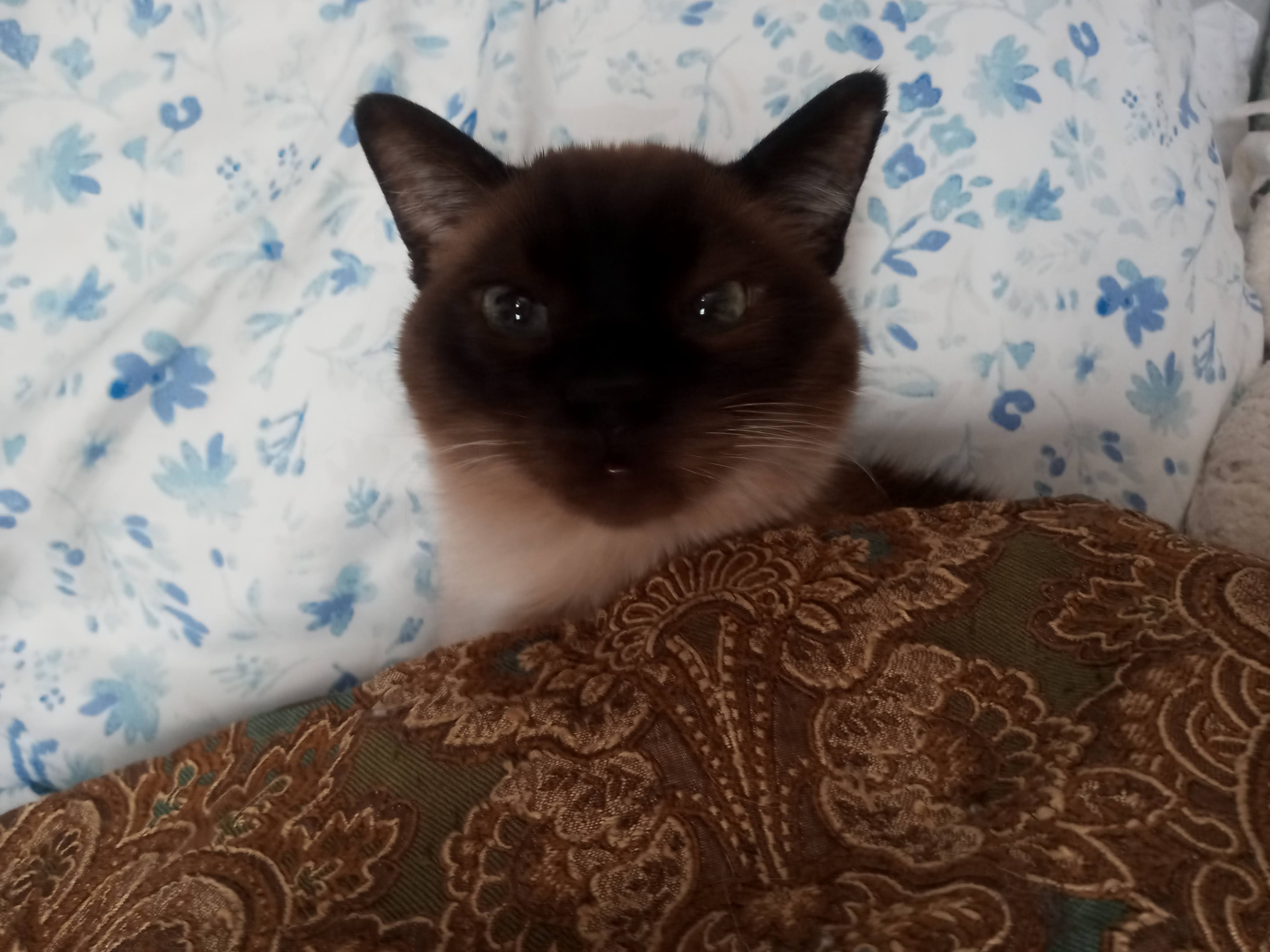
I adhered to all of the veterinarians’ instructions then 10 years ago, Sam had gotten out of the office and we found him playing with my other cats.   We took all of the cats in for FIV testing and none of them were infected so the veterinarian at that time said if they get along then they can live together.

Presently Sam lives with my other cats who are not infected with cat disease.  He sleeps with them, plays with them and yes eats out of the same bowl.


Sam is relatively healthy for his age but does suffer from typical senior cat conditions.  He has arthritis in his legs but that does not stop him from running, jumping, and playing with the dog.

Other than his arthritis I have noticed that Sam is grumpy if he doesn’t get canned food when he wants it.  He loves to eat a couple times a day and has slept in bed with us for the last decade.

**The photos in this article are my original photographs of Sam my 15-year-old FIV cat.

Here is the article I published on the day we adopted Sam 

Wednesday, February 10, 2021

Long Lived 13 Year Old FIV Cat


My FIV cat named Sam has been with us a long time even though when we first rescued him his veterinarian did not think he would survive the month. Back in 2008 Sam was a skin and bones abandoned Siamese cat that had tested positive for Feline AIDS ad Leukemia.


Honestly I knew nothing of these cat diseases but knew in my heart that I needed to give Sam a chance and that I also needed a second opinion. The attending veterinarian was adamant about Sam's dire health conditions and strongly suggested euthanasia as it would be more humane than the painful death my cat would endure.


It is safe to say that in 2008 when Sam was approximately 2 years old, that this time period for knowing and understanding FIV was the “dark ages” as many cats with this condition were euthanized because veterinarians did not fully understand the feline disease.  

Know that Sam has come a long way in the past 13 years. Here are photographs of Sam throughout the years.


Sam was retested 60 days after his first test and he did not have Feline Leukemia he did have FIV (feline immunodeficiency virus). We accepted this condition and were determined to provide Sam with a happy and long life.


If I did not tell you that Sam had FIV you would not know it from looking at him. He put on weight and at one point I thought he had a food addiction. He had gotten fat and we needed to reduce the carbohydrates by cutting out the kitty snacks and feeding him pate canned food. Sam loved all Science Diet canned foods that came with gravy. The gravy was greatly missed but Sam learned to like Pate.


For the first six years Sam lived in my office far far away from my other cats. The attending veterinarian put the fear into us by saying that if Sam groomed one of our cats or ate out of the same bowl that our normal cats would be infected with the incurable FIV disease.

We were very careful with Sam but one day he got out and he charged to the other side of the house. There he befriended our other cats and at the end of the day, they were all best friends. Of course, we were certain that they all had FIV but after having them all tested, none of the cats were sick.

Yes in the past 13 years, we were told many things, that made us think that a slight change in the household temperature, germs, stress, or household anxiety such as moving a chair was enough to make Sam deathly ill. Sam survived a tornado, household chairs moving, the vacuum, germs in the house, and stressful situations and he was a trooper, he never got deathly ill.


At one point I thought Sam may have been vaccinated for Feline immunodeficiency and that the test was a false negative. So we had a blood test done and it confirmed that Sam did have FIV.

Sam is now age 15 and he is still a happy cat with old cat symptoms such as arthritis in his hind legs. He sleeps more than he used to, but he also plays with his toys and the other cats and he loves to sleep on my husband's head.

To look at Sam you would think he was just a senior cat, you would never know that he has lived a long life with FIV an immunodeficiency cat disease.

The above photos were taken in the last 13 years and the below is Sam now.  He is thinner, Sam is older (age 15)  but he is still our happy and fun-loving fur-kid.


Saturday, July 25, 2015

FIV Cats are Good Company

It is really hot outdoors today, the heat index is at 110 Fahrenheit so my FIV cat Sam and I are lying on the sofa watching movies together. I enjoy hanging out with my FIV cat because he is funny to watch and always makes me smile.

Last week we bought a Lazy Boy small sofa/bed for the guest bedroom and installed a TV on the wall. This room is the coolest room in the house so that is where we will be today. I am watching Sam gather his favorite toys and he is bringing them up on the sofa and setting toys by my feet. He has all the toys he needs, and time to lie down and cuddle with me on the sofa.

I mentioned that I was hanging out with my FIV cat and watching TV today to my friend and they replied “ I did not know you had a sickly cat” Overall I think people have got it all wrong idea when it comes to an FIV cat. For some reason, they all seem to think that these cats are sickly, and well that is the furthest thing from the truth.

Here is an example; I rescued Sam in 2009 and he was diagnosed with FelV and AIDs. The veterinarian advised us to put him down and I said No. Instead, I got Sam neutered brought him home, got him eating Wellness grain-free cat food, and let's see today is 7/25/15 and Sam is still around and doing fine.

Know that I had him retested by a new veterinarian who specializes in cat care. He did a blood test to find out if Sam was infected with Feline Leukemia and AIDS and the veterinarian said he tested positive for FIV (feline immunodeficiency virus) Sam DID NOT have FeLV. Not sure if the first test was a false positive or what, but it was very cool to learn that Sam was a carrier of the antibody but was not sickly.

Living with an FIV cat is only different when it comes to food, must feed them high-quality grain-free, soy-free, and corn-free food. Also, you cannot let them outdoors, you need to brush their teeth and keep their veterinarian appointments. But other than that FIV cats are like other normal cats.

I really wish that people would learn more about FIV cats because many times the cats live a long life without getting sick.   

Wednesday, July 1, 2015

Happy Birthday To Sam my FIV Positive Cat


Today marks the anniversary of the day that I rescued  Sam the  Siamese cat that was abandoned in my neighborhood in 2008.

When Sam was left behind he had become freaked out and would not let anyone get close to him.  I remember once getting a hold of him but he leaped from my arms and ran away.

Trapping him was another story, he was too smart to be trapped.  So this unaltered cat got into fights with other tomcats and finally when he was skin and bones, with fur missing I was able to rescue the cat by trapping him.

Of course, rescuing him a year after being abandoned meant that he was exposed to everything.  Sam tested positive for Feline Leukemia.  The attending veterinarian suggested euthanasia and thought I was not making a wise choice to get the cat neutered and bring him to my business office.  The veterinarian went past me and spoke to my husband, told him the life expectancy for my cat was three months tops.  Well, that was six years ago, need I say more?
Playful Sam loves to hide in Zazzle shipping boxes

Was not hard to teach Sam to retrieve a ball, Yes even a tennis ball

In six years Sam survived feline leukemia because he was rechecked twice by another veterinarian who said that he was not infected but did have feline immunodeficiency virus.  He has been sick twice, had a cold, and then got a high fever and also went into kidney failure.  He was hospitalized for ten days and presently Sam is his happy self.

My rescue cat Sam may be FIV positive but he is a survivor of six years and I am hoping we have six more years of good health and happy times.

Monday, February 23, 2015

Health of FIV Cat Improves After 10 Days in Hospital


In December my FIV cat named Sam, woke up one day and was sick. He had a high fever and would not eat. We rushed him to the veterinarian, and they put him in the hospital for ten days.  Sam was given intravenous fluids, a shot of B12, antibiotics, and appetite-inducing medication. Sam was very ill and at the time the veterinarian did not know if it was due to FIV or something else.


We were told that Sam had renal failure and that his teeth needed to be removed due to feline stomatits but due to his infection he could not have his teeth removed because he lost too much weight.

View this youtube.com video to learn more about feline stomatits.  We were told that this condition is common with cats that has FIV, feline immunodeficiency virus.


After 10 days of hospital care, Sam came home and he was put on a renal diet. Sam who loves to eat food, hated the new diet and refused to eat it. We tried 3 different varieties of foods and each one was not suitable for my junk food cat. 

 He liked Blue Buffalo Healthy Living Chicken and Brown Rice cat food mixed with Purina Friskies Senior Diet Salmon Dinner in sauce pate canned cat food. This food combination made my cat Sam sing.

So when I had to take away his favorite food for a plant-based diet LP by Royal Canin with very low protein my kitty was not happy. 

 Sam would not eat and was losing weight. He could not have surgery to remove the teeth that were causing him to have pain. The veterinarian wanted Sam overweight because the aftercare of this particular surgery meant a feeding tube.

While my veterinarian was researching for another food for Sam to try his blood work came back and it showed that his kidneys returned to normal function.

I am not sure why or how this occurred but know we are all very happy and Sam is ecstatic because he can go back to eating and loving his favorite foods.


Presently Sam is putting on weight and next week I will take him in for a veterinarian checkup to see if we can schedule him for surgery.

Saturday, January 24, 2015

Hanging Out With My Cat Sam


Only a cat owner will know what I mean by "hanging out with a cat". Unlike dogs, cats are intuitive and sense when they need to be calm or caring of their owners. Today I am sick and staying in bed and my cat Sam has been hanging out with me.  Normally he is very busy but instead of playing with the dog or watching the birds he is lying next to me.


Cats can be playful and make their owners laugh and then when you do not feel good they sense your emotions the cat is really affectionate and are good company. For instance, when I do not feel good my cat knows it and he will bring all of his toys to me and set them close to me. He will not insist that I throw the cat ball far, instead, he will be happy playing with me while I lie in bed or on the sofa.

Hanging out with my cat Sam is fun because he lies next to me as if he is keeping me warm and when I nap he naps.   When I awake I usually find Sam under the fleece blanket or on top of my head purring.

Today I do not feel good so I have been lying on the sofa in the living room because my husband has a nice warm fire going in the fireplace and the heat sure feels good, Sam is hanging out with me on the sofa and so is the dog. When I do not feel good my cat is good company.


Note: Sam has feline immunodeficiency virus (FIV) and so he does sleep more, which means when you are sick and have to stay in bed, an FIV cat is good company.

Wednesday, January 21, 2015

Quality Time Spent with FIV Cat

They say that your FIV cat has 5 to 7 years to live a quality life before the feline virus that suppresses its immune system makes the cat sick and I say make those years the best years of your cat's life by spending quality time with them.

My cat Sam the Siamese playing with a ball on the bed

My cat Sam is celebrating his 7th year since becoming diagnosed with feline immunodeficiency virus and oh boy has he had a good life. In his cat life, he went from living down the street with his sister to a nice family and had a happy kittenhood until the family moved away and abandoned him. They took the female Siamese cat but left Sam to fend for himself in the neighborhood.

Sam did not do so well being outdoors because he was not neutered and the neighborhood and feral tomcats beat him up regularly. When I caught him Sam was not a pretty cat, his hair was missing, bite wounds and he was skin and bones. But I took care of him and nursed him back to health and even though he had been diagnosed with FIV (feline immunodeficiency virus) he went on to live a wonderful cat life where his people and dog loved him.

Sam has a cat room with toys and a self-warming K&H cat bed. cat tree and a window seat where he can watch the birds eat from an outdoor feeder. Sam gets plenty of belly rubs plus kisses and he is told every day that he is loved. In fact, I sing a silly little song and Sam sings the chorus.  My husband thinks it is hysterical but I do not care it is my special song that I sing with my cat Sam.

My rescue cat may have had an iffy time when he was abandoned but the last seven years have been perfect and we are hoping and praying that he has seven more years.