Showing posts with label Cat. Show all posts

Wednesday, May 13, 2026

Why Your Cat’s Microchip Needs Medical Notes

 Older cats and FIV‑tested cats need accurate microchip notes. Learn how medical alerts in the microchip file protect your cat’s health and history


Most pet parents think a microchip is just a way to get a lost cat back home. That’s true, but it’s only half the story. Your cat’s microchip can also carry life-saving medical information through the registry file linked to that chip number. And almost no one talks about it.

For me, this isn’t theoretical. It’s personal. It goes back to a cat named Sam.

Sam’s story and the question I still think about

Sam was a rescue, the kind of cat who arrives with a past you’ll never fully know. Like so many rescues, he was tested right away. His first test showed both FeLV and FIV. Sixty days later, he was tested again. This time, only FIV remained.

I was told he might live two years.

Sam lived to eighteen.

Not eighteen “sick” years. Eighteen years of sunbeams, routines, and ordinary old-age issues that had nothing to do with FIV.

And yet, I still think about that first test. Did Sam truly have FIV? Or had he been vaccinated somewhere along the way, long before he ever found me? I’ll never know. But if his microchip file had included vaccine history, that early fear and confusion could have been avoided. One simple note could have changed everything.

That’s why I believe so strongly in using microchip medical notes for cats, especially seniors and rescues with unknown histories.

What a microchip can and can’t store

This is the part that surprises most pet parents.

A microchip cannot store medical data inside the chip itself. It only holds an ID number. The medical notes live in the online registry file linked to that number.

Here’s the difference:

  • The microchip itself: a tiny device under the skin that holds a unique ID number (usually 15 digits). That’s all.
  • The microchip registry file: the online account connected to that ID number. This is where you can add contact info and medical notes.

In that registry file, you can usually add notes such as:

  • “Needs thyroid medication twice daily.”
  • “Diabetic — insulin required.”
  • “Heart condition — on daily meds.”
  • “Seizure disorder — on medication.”
  • “FIV vaccinated — may test positive on antibody tests.”

The chip is just the key. The database is the file cabinet.

What happens when your cat is scanned

Here’s what actually happens behind the scenes when a vet or shelter scans your cat’s microchip:

  1. The scanner reads the chip number.
    The handheld scanner passes over your cat and displays the microchip ID number. It does not show medical notes.
  2. The number is entered into a lookup system.
    The vet or shelter staff types that ID into a microchip lookup tool or the manufacturer’s database.
  3. The registry file appears.
    The registry shows the pet’s profile: owner contact info and, if you’ve added them, medical notes.
  4. Medical alerts show as flags or notes.
    Depending on the registry, this might look like:
    • A red medical alert icon.
    • A “special needs” or “medical alert” banner.
    • A message like “medical notes on file call for details.”
    • Full medical notes displayed on the screen.
  5. If needed, the staff calls the registry.
    Some registries show the notes directly. Others require a phone call to access the details. Either way, the information is available when it matters most.

Why medical notes on the microchip file matter

Adding medical notes to your cat’s microchip file can make a real difference in an emergency or shelter situation. A simple line of text can:

  • Alert staff that your cat needs thyroid medication or insulin.
  • Warn that your cat has a heart condition or seizure disorder.
  • Explain that an older cat may test FIV-positive due to an old vaccine, not infection.
  • Help prevent unnecessary fear, misdiagnosis, or even euthanasia in a shelter setting.
Your cat can’t explain their medical history when they’re lost or scared. The microchip file can do it for them.

FIV, old vaccines, and why notes still matter today

Even though the FIV vaccine hasn’t been used for years in many places, its shadow is still here. Older cats who test positive today may not be infected at all  they may simply be showing antibodies from a vaccine they received long ago.

Without documentation, no one seeing that test result will know the difference.

That’s where a microchip note like “FIV vaccinated may test positive on antibody tests” can change the entire story. It can turn a frightening test result into a manageable piece of history.

For Sam, I’ll never know whether that first FIV result was infection or vaccine. But I do know this: if his microchip file had included vaccine history, those early conversations would have been very different.

How to add medical notes to your cat’s microchip file

The exact steps vary by registry, but the process is usually simple:

  1. Find out which company your cat’s microchip is registered with (your vet or shelter can help, or you can use a universal microchip lookup online).
  2. Log in to your account or create one using the chip number.
  3. Look for sections labeled “Medical,” “Special Needs,” “Alerts,” or “Notes.”
  4. Add clear, simple information about your cat’s conditions, medications, and any important vaccine history.
  5. Save and confirm that the notes appear in the profile.

You can also ask your veterinarian what they recommend including, especially for chronic conditions or confusing test histories.

The bottom line: give your cat a voice

A microchip is more than a way home. It’s a quiet, powerful safety net.

When you add medical notes to your cat’s microchip file, you’re giving them a voice in the moments when they need it most at a shelter intake desk, in an emergency clinic, or with a stranger who found them and wants to do the right thing.

Sam didn’t have that kind of documentation. Your cat can.

And that one small step could change everything.

Sunday, October 14, 2018

Abandoned Cat is Diagnosed with FIV

A few months ago my husband and I rescued a cat that had been abandoned by its owners. Basically, they moved and left their unaltered young male cat behind to fend for himself.

This cat was freaked out., meowing loudly and pacing at the home where it's family used to live.  We saw him sitting on the porch of the abandoned house and tried to coax him to us with food and cat treats but he would not come to us.  We set the humane animal traps and caught a raccoon, a possum, and a fox but not the cat.  We were able to catch him only after he was in a horrific fight.  Then we picked him up at the side of the road and rushed him to the emergency veterinarian.

There was blood in his eyes, bite wounds all over his body and deep scratches to his face. He needed stitches, antibiotics and the veterinarian said that the eardrum in his right ear was not intact and that he had symptoms of a head injury.

We took care of him and his external wounds healed.  But his internal wounds never healed.  This abandoned cat has vision loss, hearing loss and was diagnosed with FIV (feline immunodeficiency virus).

I will never understand why people abandon their cats when they move.  Why they think a housecat will know where to go for food, shelter and how to protect themselves from predators.

Due to this cats disabilities, my husband and I decided that we would keep him.  I think it would be impossible to find an adopter who could give him the watchful care that is needed.

Buddy sways when he walks due to the head injury and his sight is way off.  If he gets onto the sofa he has difficulty getting down.  He will sit on his scratching post but sometimes needs help getting down.  His depth perception is not accurate.

We named him Buddy and we hope one day that we can socialize him with Sam my other FIV cat.  I am not sure if we will be able to do this due to Buddy's disabilities but think it is worth trying.

So I have been busy taking care of a rescued abandoned cat.   Sorry if you all thought I left my blog.  I am back now and will try to post on a regular basis.


Sunday, February 11, 2018

Entertain Indoor Cats with Window Bird Feeder

My FIV cats Sam and Lucy do miss being able to go outdoors. I know this because they both go to the side door and meow daily. We have an enclosed sun porch with many windows and both cats enjoy this room they love to lie in the sun, play with their toys, and also watch the birds in the yard. However, they get bored easily and go to the side door to meow and beg me to let them go outdoors.
Sam likes to play with his toys
My husband suggested that we buy the cats a window bird feeder. He thought that the FIV cats would find this entertaining and that it would be fun for humans too.
We found a window bird feeder with a mirror that was flush with the window. This mirror would allow the cats to watch the birds without frightening them. The birds could eat the seed peacefully, they would have no idea that a cat was behind the mirror watching their every move.
Both my husband and I liked the Coveside Panoramic In-house Window Bird Feeder with Mirrored Panel because the fit would be snug against my window. This feeder then could be viewed from our living room and we could watch the birds through the one-way see-through mirror panel.
Add caption

Before buying the feeder we did check to verify customer reviews. There were many positive comments. We learned that the feeder was quality made from wood and came already been assembled. Installation is as easy as it can be. One commenter said “ I opened the window, slid the bird feeder in place, and shut the window. That's it! It looks like a custom installation. It fits perfectly in the window and is a very attractive addition to the room”

Today we ordered the window bird feeder because we feel it will be wonderful entertainment for our FIV cats that can no longer go outdoors.

Tuesday, December 31, 2013

My FIV Cat Got a Pass on His Wellness Exam

This year when it was time to take my FIV cat named Sam in for his annual wellness exam he got a pass and did not need to go in for wellness checkup.

His veterinarian checked his last records and told us that we did not need to bring him in, but I should continue to watch him for any signs of illness.
Sam my FIV cat - Christmas 2013

Sam is as healthy as an FIV cat can be.  I am sure his nurturing environment; along with his healthy diet is a plus. Although he still longs to go outdoors to roll in the grass, so my husband intends on planting an indoor grass garden for him in the spring, something large enough to lie flat on the enclosed sun porch floor where Sam can lay in the grass and have some kitty fun.


Our veterinarian told us that Sam could very well live a long life and we are pleased with his diagnosis.

Monday, March 14, 2011

Caring For Feline Leukemia Cat in Multiple Cat Home

Feline Leukemia Awareness Postage stamp


Caring for a Feline Leukemia cat in a multiple cat home is not an easy task however it is a task that is worth the effort.  Feline Leukemia is a virus called (FeLV) and infected cats spread the virus through saliva, nasal secretions, tears, urine, and feces. Feline leukemia is contagious; therefore keep your cats indoors.


Many people will choose euthanasia when they learn that their cat has tested positive for feline leukemia.  They do not want to expose their other cats and they are afraid the FeLV cat will suffer.  

The decision is yours, however, if your FeLV cat is in the early stages and does not have symptoms the cat may be able to eliminate the virus by the fourth stage.  Therefore if you want to give your cat a chance to eliminate the virus, then learn how to care for a feline leukemia cat in a multiple cat home.


Have all of your cats tested for Feline Leukemia. The ELISA (Enzyme-Linked Immuno-Sorbent Assay) test is a way to determine if your cat has been exposed to the Feline Leukemia virus.  Your veterinarian will perform the test in their office. If the tests are negative then have your cats vaccinated.  


I needed to wait three months before I could have my cats vaccinated because they were exposed to my FeLV cat named Sam.  My veterinarian explained that it would take that long for the cats to show a positive so to be on the safe side I needed to separate my cats in my home. By separating the cats I was providing Sam with a stress-free area where he could rest and heal and I was protecting my other cats from being infected.   

Set up Safe Room:
Survey your home to determine if you have a room with a door for your feline leukemia cat.  You will need to set up a safe room for your cat that features toys, and bedding, purchase a new litter box, food, and water bowls and a cat tree would provide hours of activity. 

A room with a window is ideal.  This room will need heat and air conditioning. A home office makes for a good safe room as it allows the cat to interact with people.  

A sunroom that has heat and air would also be a good safe room for your cat. If you use a guest bedroom then remove some of the furniture, so there is room for your cat and their needs. Set up a separate living area for your FeLV cat that does not permit any access to your other cats.  


Choose the safe room wisely because this is where your FeLV cat will live while they have the virus or until your veterinarian gives you the okay to reunite the cats.

Use caution before you enter the safe room put your healthy cats in another room and shut the door.  This is a safety measure to protect healthy cats in the event the cat with FeLV gets out when you enter the room. Your cat may be infected with the virus but they still are playful and loving cats and want to run through the house.

Cat Diet 
Continue to feed your healthy cats their food and feed your FeLV cat a high-protein food with antioxidants. Sam eats a high-protein diet that is similar to what a wild cat would eat. Blue Buffalo Wilderness canned food is high in protein and has no grain fillers.  

The canned food will also aid in keeping the cat hydrated. I mix half a can with two tablespoons of water or organic chicken broth and my cat Sam loves it. I also feed Sam hard crunchy kibble to remove the plaque from his teeth. You can also feed your cat a raw diet that is formulated for cats.

Tips:
  • Wash the food, and water bowls with antibacterial dish soap daily.  Provide cats with fresh clean water daily.  Clean litter boxes daily and wash the litter box with antibacterial soap once a week.
  • Remove your shoes before entering the room that houses your FeLV cat. This is a safety measure to prevent the spread of germs.
  • Administer heartworm pills and protect your cats from fleas, ticks, and mites. Do this especially if the cat plays with dogs. Keep your cat up to date with vaccines. Keep the cat hydrated.
  • Allow the family dog to visit with the FeLV cat; that is if they get along. 
  • The feline Leukemia virus infects cats only.
  • Install a separate thermostat in your FeLV cat's room. Set the thermostat at 74. The room must have a comfortable temperature at all times. Your FeLV cat cannot be in a draft.
  • Watch for colds, runny eyes, swollen lymph nodes, and or cough. If your cat vomits or has diarrhea call your veterinarian.  If suspect any illness make an appointment for your cat to see your veterinarian.
  • Keep all veterinarian appointments. Your cat needs to have routine blood tests twice a year. These tests will indicate the progression of the virus.


Learn More about Feline Leukemia 
Educate yourself by reading as much as you can about the virus feline leukemia and Feline Immunodeficiency Virus   This will help you to understand the treatment tips prescribed by your veterinarian and it will enable you to care for your cat.  


Wednesday, January 19, 2011

Adopting Cat with Feline Immunodeficiency Virus


Adopting a cat that has a health concern is never easy however if you love cats and are a nurturing type of person then you will save a cat with feline immunodeficiency virus (FIV) life.  

There are so many homeless and stray cats that test positive for the antibody for feline immunodeficiency virus however because these cats are strays there is no way of knowing if the cats were vaccinated and thus the blood test could be a false positive. 
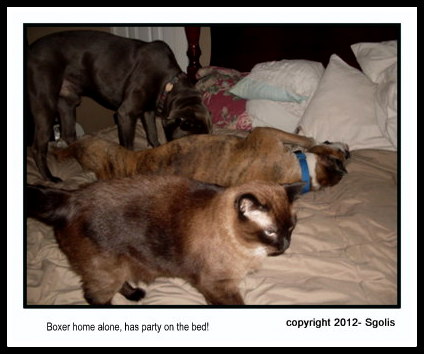
FIV cat plays with dogs on the bed

Feline immunodeficiency is commonly referred to as FIV, AIDS or Cat AIDS. This viral infection attacks the infected cat’s immune system and makes it difficult for the cat to fight off infection. FIV has infected cats worldwide as it is transmitted by saliva or deep bite wounds.  The virus enters the other cat’s blood stream and the cat is infected for the rest of their life.
 
Many animal shelters are euthanizing cats that test positive for FIV (Feline Immunodeficiency virus).  However, studies show that there is no need to euthanize these cats.  
Normal as Sam can be, he has FIV

FIV cats that carry the antibody can live long and relatively healthy lives in households where they are the only cat. Or they can live with cats that are not infected provided they get along and do not fight.  I have three FIV kittens that were raised with two healthy cats.  The two healthy cats have never been infected with the feline immunodeficiency virus.  
My cat Sam had FIV since 2008 / he is a rescue

The cat relationship is normal.  The adult cats took care of the kittens with grooming and they ate out of the same bowl.  They did not fight or bite each other.  The kittens are now age two.  I also have Sam my rescued Siamese cat.  He does not get along with other cats so he resides in my office and is with me and my dog 7 to 8 hours a day.  We tried to socialize him with other cats but he is a fighter.  

FIV cat Sam sleeping in Water container

Getting Home Read for your Adopted FIV Cat


The cat owner would have to provide a sanitary lifestyle by keeping the home spotless and litter boxes clean.  You would not want to weaken your cats immune system by exposing them to unnecessary germs.   


The indoor temperature would need to be an average temperature of 72 degrees.  You do not want your cat to be cold or hot. You would also need to feed an FIV cat a quality high protein diet with low carbohydrates.  Canned cat food that is supplemented with antioxidants. Supply the cat with filtered water and provide a stress free environment and your FIV cat should live a long life.  


A cat that is infected with FIV cannot go outside unless it is to an enclosed shelter that is safe from interaction with other cats. 
FIV cat plays with toys


No Kill Animal Shelters

I have noticed many cats that test positive for feline immunodeficiency virus at the private no kill shelters and these cats appear well groomed, in good healthy and happy.  While the virus does not have outward symptoms one will be able to note if the cat is lethargic, or has a weakness.  

The no kill shelters will offer cats that have the FIV antibody for adoption because the cat is healthy enough to live in a household with no other cats, and will live a relatively long life.  All these cats need in their life is a forever home where they will be loved.  I believe that adopters are passing by these cats because they are afraid of the virus and feel that the cat will infect humans or the cat will be sickly.  

A cat that is infected with the FIV antibody has the same mannerisms as normal cats: they play with their toys, they love, and they cuddle with their people.   


The only difference that I can see is that Sam and the two kittens sleep more than the other cats.  Sleeping more is not an issue for me, and it should not be an issue with adopters. 


Long Term Care for FIV Cats


Your FIV cat will need to go to the veterinarian for a wellness check up as soon as you adopt them.  

The veterinarian will exam your cat and he may test their blood. Thereafter your cat will have yearly preventative check-ups.  If you cat shows signs of cold; sneezing , runny nose, tear staining then you must contact your veterinarian for medical care.
I recommend that you do not turn your back on a cat that has the FIV antibody. If you have a household that does not have any other cats then this situation is ideal for an FIV cat.  It would be stressful to try to socialize an FIV cat with other cats simply because they may fight.

Note: 
  • A cat that is vaccinated for the prevention of  Feline Immunodeficiency Virus will show a false positive for the rest of their life. Many veterinarians do not vaccinate cats for this reason.
  • There is no cure for the feline immunodeficiency virus.
  • Spay or neuter your cat and treat them with flea preventative as the biting fleas will cause infection. 
  • Keep all veterinarian appointments.
  • To date, I have adopted 5 cats that have tested positive for FIV.  To look at them they appear as normal healthy cats.


.